
Discovery and characterization of small organic molecules, cyclic peptides, and fully human antibodies specific to targets of interest.
Discovery and validation of pharmaceutical targets for ligand-based pharmacodelivery. Philochem uses state-of-the-art chemical proteomics technologies for the identification of accessible targets and for the characterization of the mechanism of action.
Development of small molecule-, peptide-, and antibody-based therapeutics, with the potential to achieve an unprecedented level of activity and selectivity. Philochem is performing pioneering work for the ligand-based delivery of drugs, radionuclides and immunomodulators.
Encoded Library Technologies
DNA-encoded chemical libraries (DELs)
The discovery of small organic ligands to protein targets has been traditionally performed by screening very large sets of organic molecules (termed “chemical libraries”), one by one, using high-throughput screening procedures. The assembly of such libraries is very expensive and time consuming. While the value of high-throughput library screening has been demonstrated in various pharmaceutical applications, it is not uncommon that binding molecules of sufficient affinity and specificity (called “hits”) cannot be discovered using conventional screening campaigns.
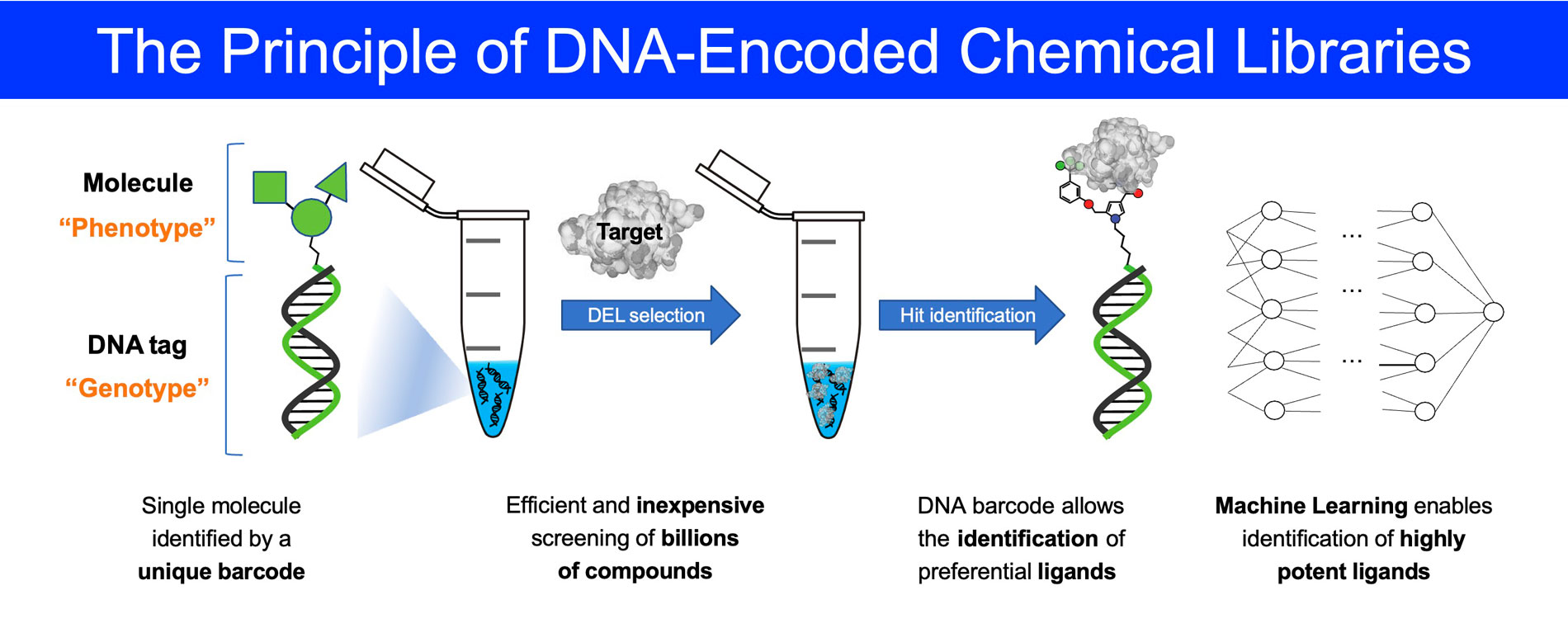
In light of these considerations, considerable efforts have been devoted to the establishment of encoded libraries which enable the construction and screening of compound sets of unprecedented size in a cost-efficient fashion. Encoded libraries enable a physical connection between a phenotype (i.e., a ligand) and the corresponding genetic information.
Philochem has been practicing antibody-phage display technology for the last 25 years. All antibody-ligands, that Philochem has moved to clinical trials, stem from research activities which have been conducted using its proprietary libraries.
In 2004, our group pioneered the construction of DNA-encoded combinatorial libraries of organic molecules. The technology allows the rapid selection of specific binders (“Phenotype”), physically connected to unique DNA tags (“Genotype”) that work as amplifiable identification barcodes. Since then, Philochem has synthesized several DNA-encoded chemical libraries, featuring different designs, that have yielded high affinity and selective binders to a variety of target proteins of pharmaceutical interest.
To date, Philochem uses encoded libraries for both in house discovery programs and in the frame of collaborations with pharmaceutical industrial or academic partners.
More information on Philochem´s DEL platform is available HERE
For collaboration opportunities, partnerships, or fee-for-service agreements on DNA-encoded chemical libraries, please contact Frederik.Peissert@philochem.ch
References
A DNA-encoded chemical library based on chiral 4-amino-proline ena-bles stereospecific isozyme-selective protein recognition
Oehler et al., Nat. Chem., 2023; 15(10):1431-1443
Selective tumor targeting enabled by picomolar fibro-blast activation protein inhibitors isolated from a DNA-encoded affinity maturation li-brary
Puglioli et al., Chem. 2023, 9, 411-429
Deep Learning Approach for the Discovery of Tumor-Targeting Small Organic Ligands from DNA-Encoded Chemical Libraries
Torng et al., ACS Omega 2023, 8, 25090-25100
Impact of library input on the hit discovery rate in DNA-encoded chemical library selections
Puglioli et al., Chem. Sci., 2023; DOI:10.1039/D3SC03688J
Isolation of a Natural Killer Group 2D Small-Molecule Ligand from DNA-Encoded Chemical Libraries
Dakhel et al., ChemMedChem, 2022, 17(21):e202200350
Selective tumor targeting enabled by picomolar fibroblast ac-tivation protein inhibitors isolated from a DNA-encoded affinity maturation library
Puglioli et al. (2022) Chem, doi: 10.1016/j.chempr.2022.10.006
Isolation of a Natural Killer Group 2D Small-Molecule Ligand from DNA-Encoded Chemical Libraries
Dakhel et al. (2022) ChemMedChem, 17, e202200350
Specific Inhibitor of Placental Alkaline Phosphatase Isolated from a DNA-Encoded Chemical Library Targets Tumor of the Female Reproductive Tract
Bassi et al. (2021) J Med Chem, 64, 15799-15809
Affinity Selections of DNA-Encoded Chemical Libraries on Carbonic Anhydrase IX-Expressing Tumor Cells Reveal a Dependence on Ligand Valence
Oehler et al. (2021) Chemistry, 27, 8985-8993
Stereo- and regiodefined DNA-encoded chemical libraries enable efficient tumour-targeting applications
Favalli et al. (2021) Nat Chem, 13, 540-548
Identification and Validation of New Interleukin-2 Ligands Using DNA-Encoded Libraries
Gironda-Martinez et al. (2021) J Med Chem 64, 17496-17510
A Single‐Stranded DNA‐Encoded Chemical Library Based on a Stereoiso-meric Scaffold Enables Ligand Discovery by Modular Assembly of Building Blocks
Bassi et al. (2020) Advanced Science, 7(22): 2001970
On-DNA hit validation methodologies for ligands iden-tified from DNA-encoded chemical libraries
Prati et al. (2020) Biochem Biopsy’s Res Commun, 533, 235-240
Reflections on DNA-encoded chemical libraries
Lerner and Neri (2020) Biochem Biopsy’s Res Commun, 527, 757-759
Quantitative Assessment of Affinity Selection Performance by Using DNA-Encoded Chemical Libraries
Sannino et al. (2019) Chembiochem, 20, 955-962
Versatile protein recognition by the encoded display of multiple chemical elements on a constant macrocyclic scaffold
Li et al. (2018) Nat Chem, 10, 441-8
Affinity Enhancement of Protein Ligands by Reversible Covalent Modifica-tion of Neighboring Lysine Residues
Dal Corso et al. (2018) Agew Chem Int Ed Engl, 57, 17178-82
DNA-Encoded Chemical Libraries: A Selection System Based on Endowing Organic Compounds with Amplifiable Information
Neri and Lerner (2018) Annu Rev Biochem, 8, 479-502
Impact of a Central Scaffold on the Binding Affinity of Frag-ment Pairs Isolated from DNA-Encoded Self-Assembling Chemical Libraries
Bigatti et al. (2017) ChemMedChem 12,1748
Optimized Reaction Conditions for Amide Bond Formation in DNA-Encoded Combinatorial Libraries
Li et al. (2016) ACS Comb Sci, 18, 438-43
Identification of Structure–Activity Relationships from Screening a Struc-turally Compact DNA-Encoded Chemical Library
Franzini et al. (2015) Anger Chem Int Ed Engl, 23, 3927-31
Dual-pharmacophore DNA-encoded chemical librar-ies
Scheuermann et al. (2015) Curr Open Chem Viol, 26, 99-103
DNA-Encoded Chemical Libraries: A Tool for Drug Discovery and for Chemical Biology
Scheuermann et al. (2010) Chembiochem 11, 931-7
High-throughput sequencing allows the identification of binding mole-cules isolated from DNA-encoded chemical libraries
Mannocci et al. (2008) Proc Natl Acad Sci USA, 105, 17670-5
Encoded self-assembling chemical libraries
Melkko et al. (2004), Nature Biotechnol, 22-568-74
Encoded Library Technologies
Cyclic peptide phage libraries
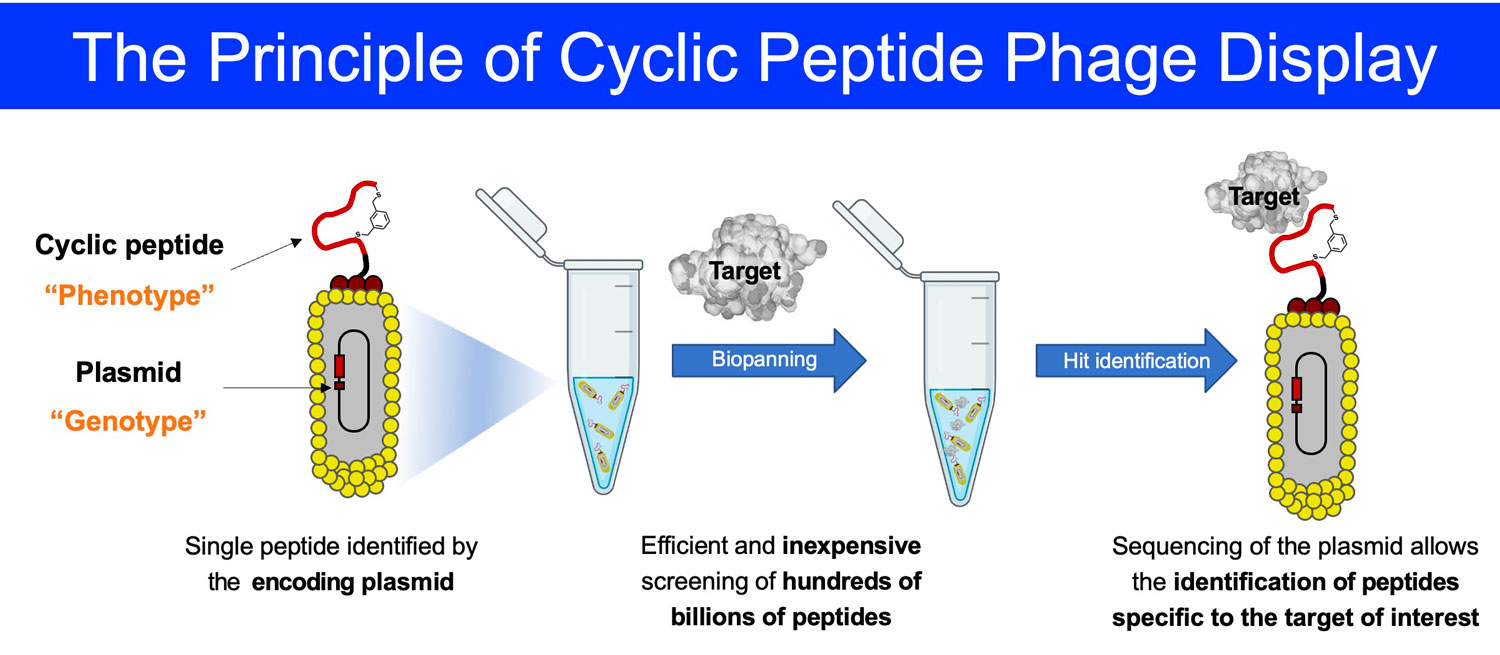
Cyclic peptides represent a promising avenue for the development of targeted therapeutics due to their ability to bind to target proteins with high affinity and selectivity, combined with their low inherent toxicity, their relatively high stability, and their ease of production. Cyclic peptides specific to a target of interest can be isolated from large combinatorial libraries such as phage libraries. Philochem has generated innovative cyclic peptide phage libraries comprising over 100 billion library members.
To date, Philochem uses cyclic peptide phage libraries for both in house discovery programs and in the frame of collaborations with pharmaceutical industrial or academic partners.
References
Phage-encoded combinatorial chemical libraries based on bicyclic peptides
Heinis and Winter (2009) Nat Chem Biol., 5, 502
Encoded Library Technologies
Antibody phage libraries
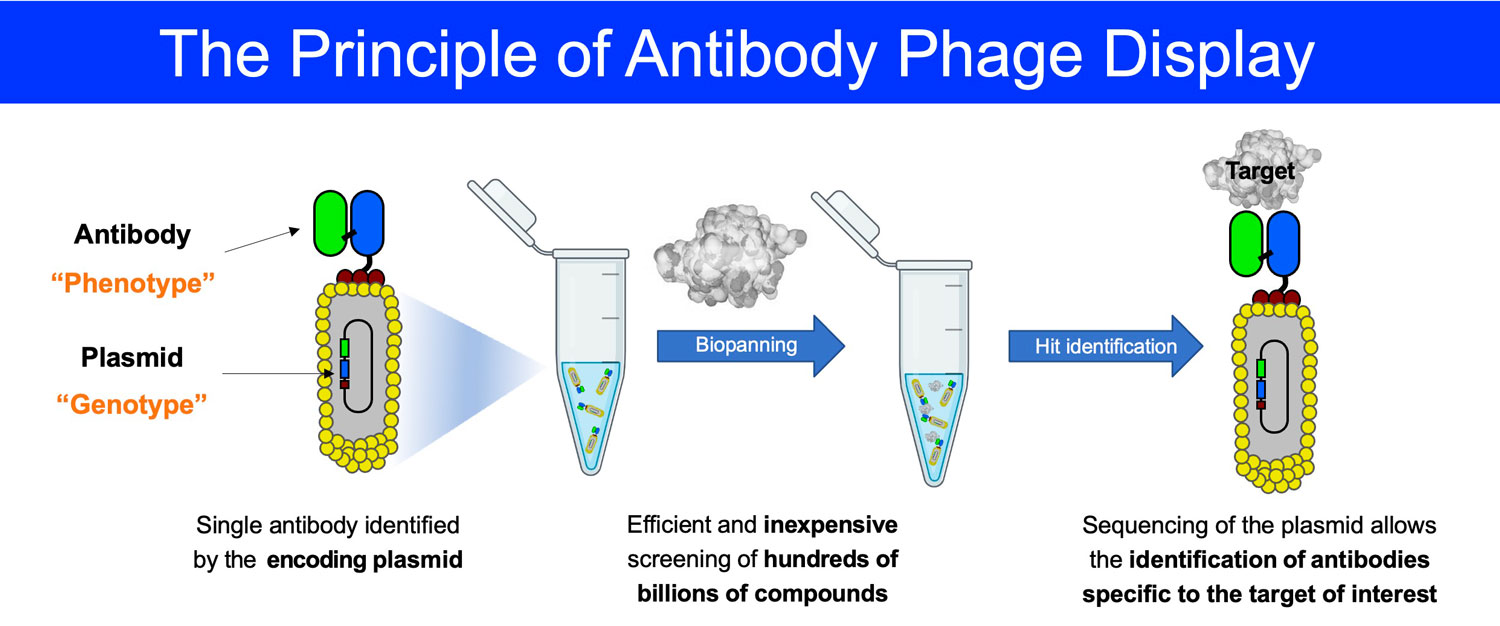
The discovery of specific binders to protein targets is a crucial step in the discovery of new products at Philochem. Over the last 15 years, we have published the construction and validation of numerous antibody phage libraries comprising more than 100 billion members. These proprietary libraries enable the isolation of specific human monoclonal antibodies against virtually any antigen of interest.
To date, Philochem uses antibody phage libraries for both in house discovery programs and in the frame of collaborations with pharmaceutical industrial or academic partners.
References
Generation of a novel fully human non-superagonistic anti-CD28 antibody with efficient and safe T-cell co-stimulation properties
Elsayed et al., Mabs 2023 Jan-Dec;15(1):2220839
Generation and in vivo characterization of a novel high-affinity human antibody targeting carcinoembryonic antigen
Plüss et al., Mabs 2023 Jan-Dec;15(1):2217964
Generation and in vivo validation of an IL-12 fusion protein based on a novel anti-human FAP monoclonal antibody
Nadal et al., J Immunother Cancer. 2022 Sep;10(9):e005282
Selection of a PD-1 blocking antibody from a novel fully human phage display library
Peissert et al., Protein Sci. 2022 Dec;31(12):e4486
Novel human monoclonal antibodies specific to the alternatively spliced domain D of Tenascin C efficiently target tumors in vivo
Nadal et al., MAbs. 2020 Jan-Dec;12(1):1836713
A novel synthetic naïve human antibody library allows the isolation of antibodies against a new epitope of oncofetal fibronectin
Villa et al., MAbs. 2011 May-Jun;3(3):264-72
A high-affinity human monoclonal antibody specific to the alternatively spliced EDA domain of fibronectin efficiently targets tumor neo-vasculature in vivo
Villa et al., Int J Cancer. 2008 Jun 1;122(11):2405-13
A Highly Functional Synthetic Phage Display Library Containing over 40 Billion Human Antibody Clones
Weber et al. (2014) PLoS One, 9, e100000
Selection and characterization of human antibody fragments specific for psoriasin – A cancer associated protein
Cyranka-Czaja et al. (2012) Biochem Biophys Res Commun, 419, 250-5
Design and construction of a naïve mouse antibody phage display library
Sommavilla et al. (2010) J Immunol Methods, 353, 41-3
The Extra-domain A of Fibronectin Is a Vascular Marker of Solid Tumors and Metastases
Rybak et al. (2007) Cancer Res, 67, 10948-57
Tumor-Targeting Properties of Novel Antibodies Specific to the Large Isoform of Tenascin-C
Brack et al. (2006) Clin Cancer Res, 12, 3200-8
Human monoclonal antibodies to domain C of tenascin-C selectively target solid tumors in vivo
Silacci et al. (2006) Protein Eng Des Sel, 19, 471-8
Design, construction, and characterization of a large synthetic human antibody phage display library
Silacci et al. (2005) Proteomics, 5, 2340-50
Isolation of anti-angiogenesis antibodies from a large combinatorial repertoire by colony filter screening
Giovannoni et al. (2001) Nucleic Acids Res, 29, E27
Design and use of phage display libraries for the selection of antibodies and enzymes
Viti et al. (2000) Methods Enzymol, 326, 480-505
A High-Affinity Human Antibody That Targets Tumoral Blood Vessels
Tarli et al. (1999) Blood, 94, 192-8
Human Antibodies With Subnanomolar Affinity Against a Marker of Angiogenesis Eluted from a Two-Dimensional Gel
Pini et al. (1998) J Biol Chem, 273, 21769-76
Targeting by affinity–matured recombinant antibody fragments of an angiogenesis associated fibronectin isoform
Neri et al. (1997) Nat Biotechnol, 15, 1271-5
Discovery and validation of pharmaceutical targets
The development of targeted therapeutics crucially relies on the identification of target antigens, which are specifically expressed at the site of disease, and which are readily accessible for agents coming from the bloodstream.
In collaboration with with ETH Zürich, Philochem has pioneered chemical proteomics methods for the characterization of accessible markers of pathology, which can be drugged by antibodies and small molecule ligands.
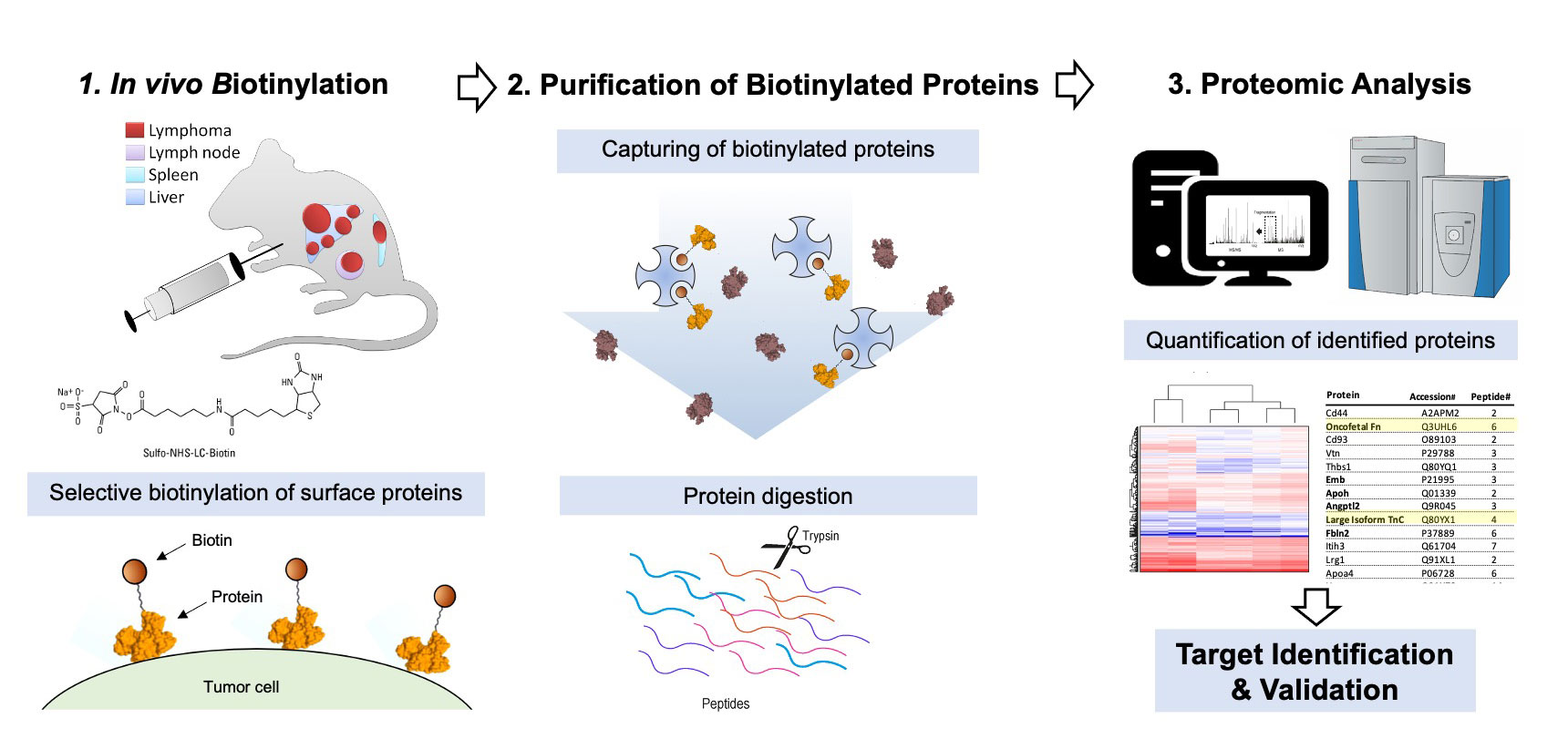
In a simple setup, cell lines can be submitted to surface biotinylation followed by capture on streptavidin resin and mass spectrometric analysis of tryptic peptides.
In a more complex setup, in vivo biotinylation procedures of rodent models of pathology enable the chemical proteomic characterization of vascular proteins in health and in disease. The technology has been extended to the ex vivo perfusion of surgically-resected human organs with cancer.
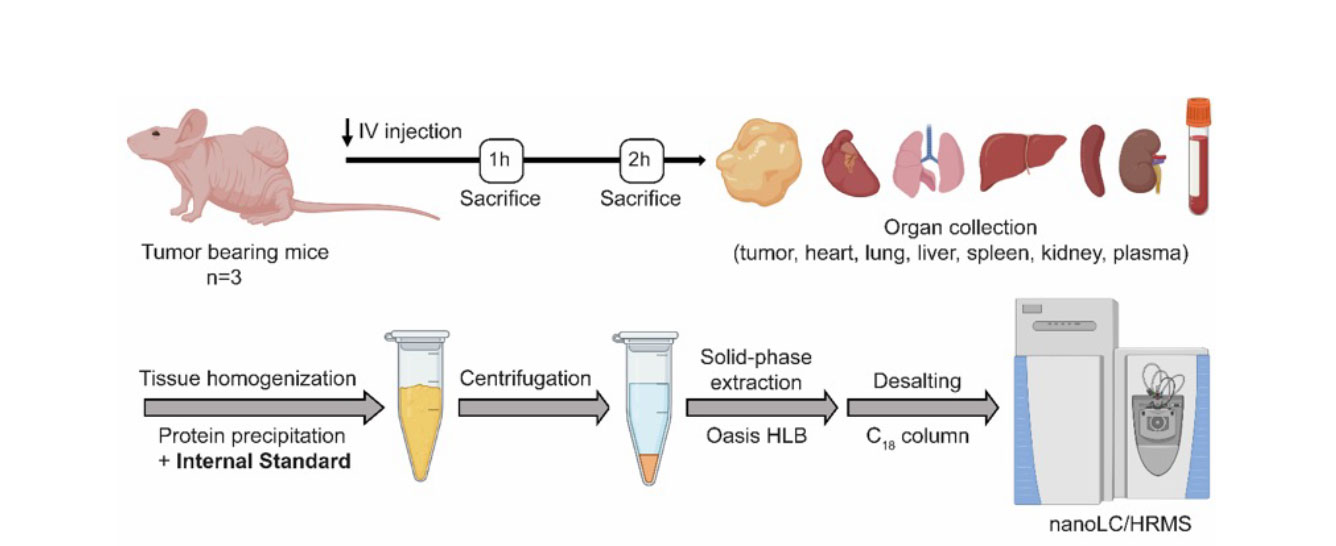
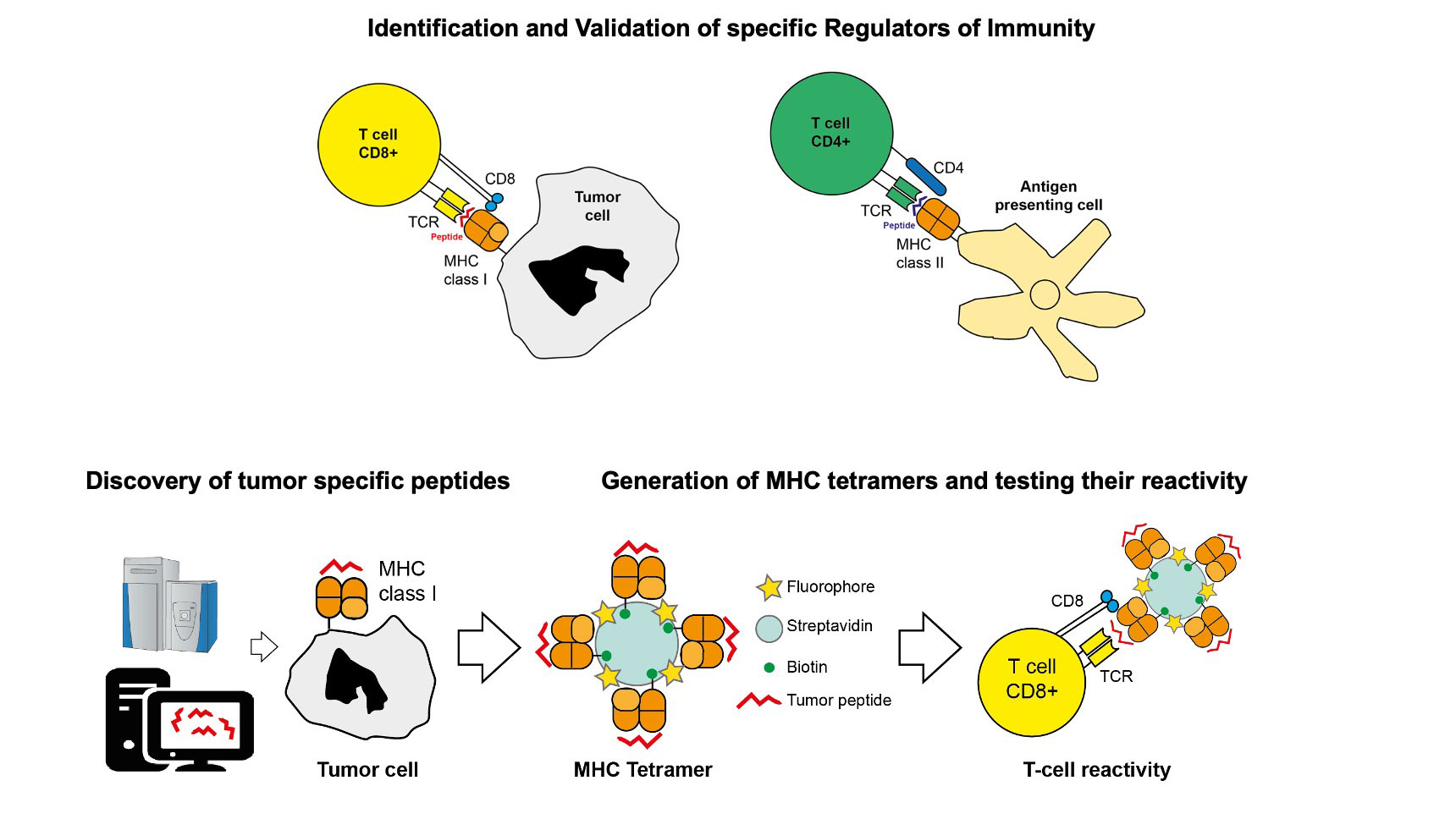
More broadly, we use MS-based chemical proteomics approaches to study the mechanism of action of our drugs. This includes the mass spectrometric quantification of drug delivery and release, as well as MHC-I peptidome analysis
References
Bisbal Lopez et al. (2023) Front Pharmacol, 14:1320524
https://www.frontiersin.org/journals/pharmacology/articles/10.3389/fphar.2023.1320524/full
Mass Spectrometry-Based Method for the Determination of the Biodistribution of Tumor-Targeting Small Molecule–Metal Conjugates
Gilardoni et al. (2022) Anal Chem, 93, 10715
Antibody-based Delivery of TNF to the Tumor Neovasculature Potentiates the Therapeutic Activity of a Peptide Anticancer Vaccine
Probst et al. (2019) Clin Cancer Res, 25, 698-709
Probst et al. (2017) Cancer Res, 77, 3644-54
Ritz et al. (2017) Proteomics, 17, 10.1002/pmic.201600364
Gloger et al. (2016) Cancer Immunol Immunother, 65, 1377-93
Ritz et al. (2016) Proteomics, 16, 1570-80
Sofron et al. (2016) Eur J Immunol, 46, 319-28
Elia et al. (2014) J Proteomics, 107, 50-5
Neri and Supuran (2011) Nat Rev Drug Discov, 10, 767-77
Fugmann et al. (2011) Kidney Int, 80, 272-81
Schliemann et al. (2010) Blood, 115, 736-44
Borgia et al. (2010) Cancer Res, 70, 309-18
Rösli et al. (2008) Methods Mol Biol, 418, 89-100
Conrotto et al. (2008) Int J Cancer, 123, 2856-64
Castronovo et al. (2006) Mol Cell Proteomics, 5, 2083-91
Brack et al. (2006) Clin Cancer Res, 12, 3200-8
Scheurer et al. (2005) Proteomics, 5,2718-28
Rybak et al. (2005) Nat Methods, 2, 291-98
Neri and Bicknell (2005) Nat Rev Cancer, 5,436-46
Small Molecule Therapeutics
Low molecular weight compounds represent attractive alternatives to antibodies for tumor targeting applications. The advantages of small molecule therapeutics include a fast extravasation, a deep and homogeneous penetration into solid tumors, as well as faster development timelines.
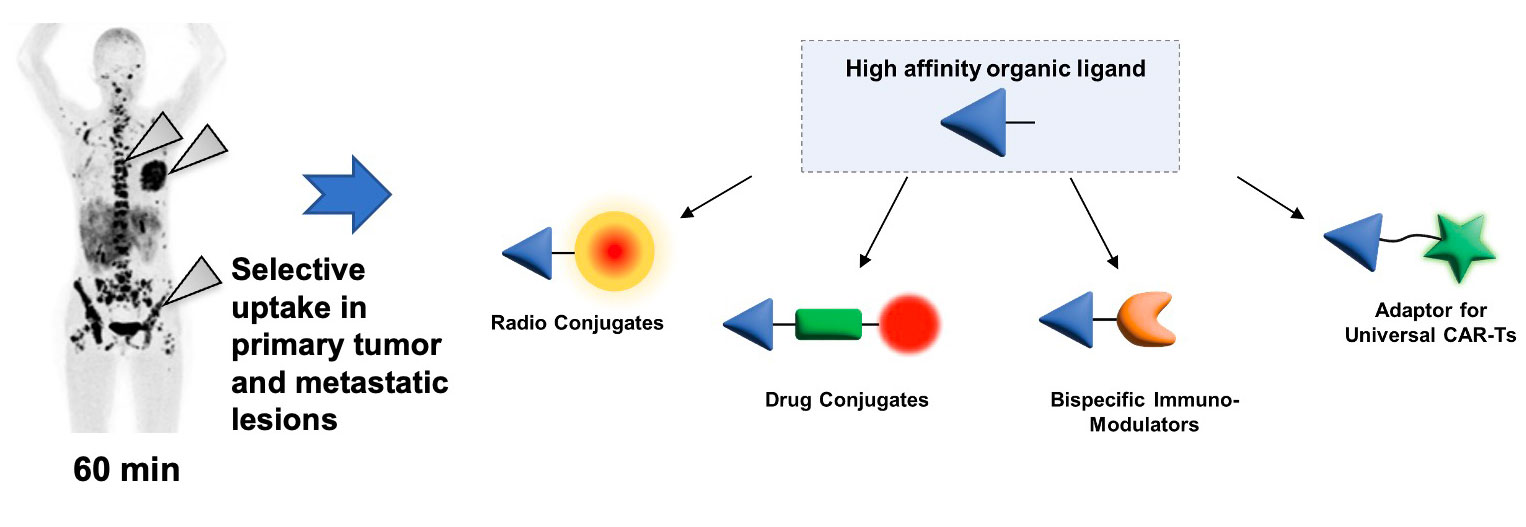
Thanks to technological advances in the field of DNA-encoded chemical libraries, we are able to generate small molecule ligands with antibody-like properties featuring ultra-high affinity to their target antigen and long residence time at the tumor site.
Philochem uses small ligands with exceptional targeting performance for the selective delivery of (i) radionuclides, (ii) cytotoxic agents, (ii) immunomodulators, or (iv) adaptors for universal Chimeric Antigen Receptor T cell therapy.
Please visit our pipeline section for more information about individual programs.
References
Puglioli et al. (2022) Chem, doi: 10.1016/j.chempr.2022.10.006
Zana et al. (2022), Clin Cancer Res CCR-22-1788
Lucaroni et al. (2022) Eur J Nucl Med Mol Imaging, doi: 10.1007/s00259-022-05982-8
Galbiati et al. (2022) J Nucl Med, numed.122.264036
Backhaus et al. (2021) Eur J Nucl Med Mol Imaging, 10.21203/rs.3.rs-969176/v1
Millul et al. (2021) PNAS, 118, 16, e2101852118
Millul et al. (2021) Mol Cancer Ther, 20, 512-22
Kulterer et al. (2021) J Nucl Med, 62, 360-5
Pellegrino et al. (2020) Bioconjug Chem, 31, 1775-83
Cazzamalli et al. (2018) Clin Cancer Res, 24, 3656-67
Cazzamalli et al. (2017) J Control Release, 246, 39-45
Cazzamalli et al. (2016) Mol Cancer Ther, 15, 2926-35
Krall et al. (2016) J Nucl Med, 57, 943-9
Wichert et al. (2015) Nat Chem, 7, 241-9
Casi & Neri (2015) J Med Chem, 58, 8751-61
Minn et al. (2016) Oncotarget, 7, 56471-79
Yang et al. (2015) Oncotarget, 6, 33733-42
Krall et al. (2014) Chem Sci, 5, 3640-4
Krall et al. (2014) Angew Chem Int Ed, 53, 4231-5
Krall et al. (2013) Angew Chem Int Ed Engl, 52, 1384-1402
Müller et al. (2013) J Nucl Med, 54, 124-31
Ahlskog et al. (2009) Bioorg Med Chem Lett, 19, 4581-6
Dumelin et al. (2008) Angew Chem Int Ed Engl, 47, 3196-3201
Antibody-based Therapeutics
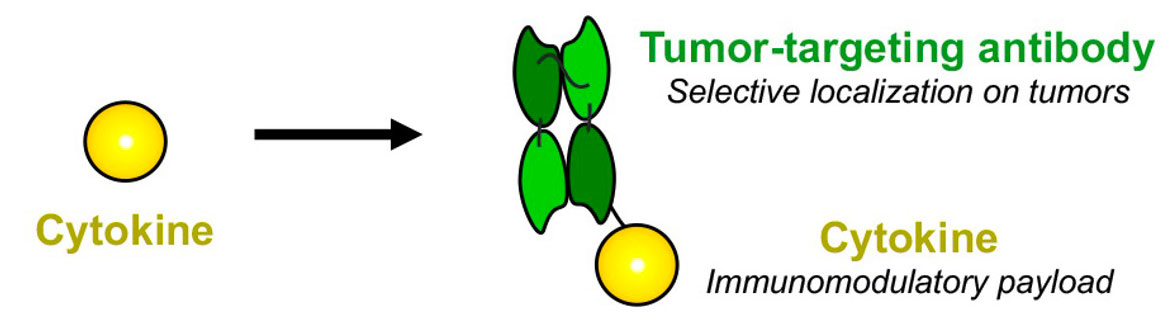
The Philogen Group has pioneered fully human antibody-cytokine fusion proteins (also called “immunocytokines”). Cytokines are naturally produced proteins of the human body, which can either potently boost or suppress the activity of the immune system. A number of recombinant cytokines have been approved for therapeutic use, but their systemic administration at therapeutically active doses is often hindered by strong side effects. To overcome this limitation, we have engineered innovative antibody-cytokine fusion proteins to selectively localize at the site of disease and to obtain an improved therapeutic index.
The cytokine payload is chosen depending on the nature of the disease. For example, pro-inflammatory cytokines such as TNF, IL2 or IL12 can be used in oncology, while anti-inflammatory cytokines such as IL10 can be used to treat inflammatory conditions.
Our Group has generated, produced, tested, and published more than 50 cytokine payloads fused to proprietary targeting antibodies. The most promising candidates have been brought to clinical trials, one of which has recently successfully completed a Phase III trial.
For more information about the individual programs, please visit the pipeline section of the Philogen group.
References
Cytokine Biopharmaceuticals with “Activity-on-Demand” for Cancer Therapy
Rotta et al. (2024) Bioconjug Chem., 35(8):1075
Generation of a novel fully human non-superagonistic anti-CD28 antibody with efficient and safe T-cell co-stimulation properties
Elsayed et al. (2023) Mabs,15(1):2220839
Targeted interleukin-2 enhances the in vivo anti-cancer activity of Pluvicto™
Georgiev et al. (2024) Eur J Nucl Med Mol Imaging, 51(8):2332
Optimizing the Design and Geometry of T Cell–Engaging Bispecific Antibodies Targeting CEA in Colorectal Cancer
Elsayed et al. (2024) Mol Cancer Ther., 23(7):1010
Tripokin: A multi-specific immunocytokine for cancer immunotherapy
Prodi et al. (2024) Int J Cancer Aug 23
A novel strategy to generate immunocytokines with activity-on-demand using small molecule inhibitors
Rotta et al. (2024) EMBO Mol Med, 16(4):904
An Engineered IFNγ-Antibody Fusion Protein with Improved Tumor-Homing Properties
Di Nitto et al. (2023) Pharmaceutics, 15(2):377
Targeted delivery of tumor necrosis factor in combination with CCNU induces a T cell–dependent regression of glioblastoma
Look et al. (2023) Sci Transl Med 15(697):eadf2281
Generation and in vivo characterization of a novel high-affinity human antibody targeting carcinoembryonic antigen
Plüss et al. (2023), Mabs 15(1):2217964
An Engineered IFNγ-Antibody Fusion Protein with Improved Tumor-Homing Properties
Di Nitto et al. (2023), Pharmaceutics 15(2):377
Targeted Interleukin-9 delivery in pulmonary hypertension: Comparison of immunocytokine formats and effector cell study
Heiss et al. (2023), Eur J Clin Invest 53(3):e13907
An Antibody Targeting Fibroblast Activation Protein Simultaneously Fused to Interleukin-2 and Tumor Necrosis Factor Selectively Localizes to Neoplastic Lesions
Prodi et al. (2023) Antibodies (Basel), 12(2):29
Generation and in vivo validation of an IL-12 fusion protein based on a novel anti-human FAP monoclonal antibody
Nadal et al. (2022) J Immunother Cancer 10(9):e005282
Design and Characterization of Novel Antibody-Cytokine Fusion Proteins Based on Interleukin-21
Di Nitto et al (2022) Antibodies (Basel) 11(1):19
Releasing the brakes of tumor immunity with anti-PD-L1 and pushing its accelerator with L19–IL2 cures poorly immunogenic tumors when combined with radiotherapy
Pimentel et al. (2021) J Immunother Cancer, 9(3):e001764.
Inference of molecular structure for characterization and improvement of clinical grade immunocytokines
Ongaro et al (2021) J Struct Biol 213(1):107696
Antibody-based delivery of interleukin-9 to neovascular structures: Therapeutic evaluation in cancer and arthritis
Gouyou et al. (2021) Exp Biol Med 246(8):940-951
Therapeutic Evaluation of Antibody-Based Targeted Delivery of Interleukin 9 in Experimental Pulmonary Hypertension
Gouyou et al. (2021) Int J Mol Sci 22(7):3460
Antibody-mediated delivery of LIGHT to the tumor boosts natural killer cells and delays tumor progression
Stringhini et al. (2021) Mabs 13(1):1868066
A Novel Antibody–IL15 Fusion Protein Selectively Localizes to Tumors, Synergizes with TNF-based Immunocytokine, and Inhibits Metastasis
Corbellari et al. (2021) Mol Cancer Ther, 20, 859-71
A novel format for recombinant antibody-interleukin-2 fusion proteins exhibits superior tumor-targeting properties in vivo
Ongaro et al. (2020) Oncotarget, 11, 3698-3711
Immunocytokines are a promising immunotherapeutic approach against glioblastoma
Weiss et al. (2020) Sci Transl Med, 7, 12(564):eabb2311
Antibody–Cytokine Fusions: Versatile Products for the Modulation of Anticancer Immunity
Neri (2019) Cancer Immunol Res, 7, 348-54
Antibody-cytokine fusion proteins: Biopharmaceuticals with immunomodulatory properties for cancer therapy
Hutmacher and Neri (2019) Adv Drug Deliv Rev, 15, 67-91
Potency-matched Dual Cytokine–Antibody Fusion Proteins for Cancer Therapy
De Luca et al. (2017) Mol Cancer Ther, 16, 2442-51
Immunocytokines: a novel class of products for the treatment of chronic inflammation and autoimmune conditions
Bootz and Neri (2016) Drug Discov Today, 21, 180-9
Immunocytokines and bispecific antibodies: two complementary strategies for the selective activation of immune cells at the tumor site
Kiefer and Neri (2016) Immunol Rev, 270, 178-92
Immunocytokines for cancer treatment: past, present and future
Neri and Sondel (2016) Curr Opin Immunol, 40, 96-102
The antibody-based targeted delivery of interleukin-4 and 12 to the tumor neovasculature eradicates tumors in three mouse models of cancer
Hemmerle and Neri (2014) Int J Cancer, 134, 467-77
Antibody-based delivery of IL4 to the neovasculature cures mice with arthritis
Hemmerle et al. (2014) Proc Natl Acad Sci USA, 111, 12008-12
Antibody-Based Delivery of Interleukin-2 to Neovasculature Has Potent Activity Against Acute Myeloid Leukemia
Gutbrodt et al. (2013) Sci Transl Med, 5, 201ra118
The Immunocytokine L19–IL2 Eradicates Cancer When Used in Combination with CTLA-4 Blockade or with L19-TNF
Schwager et al. (2013) J Invest Dematol, 133, 751-8
Paclitaxel Enhances Therapeutic Efficacy of the F8-IL2 Immunocytokine to EDA-Fibronectin–Positive Metastatic Human Melanoma Xenografts
Moschetta et al. (2012) Cancer Res, 72, 1814-24
Immunocytokines: a novel class of potent armed antibodies
Pasche and Neri (2012) Drug Discov Today, 17, 583-90
The Antibody-Based Delivery of Interleukin-12 to the Tumor Neovasculature Eradicates Murine Models of Cancer in Combination with Paclitaxel
Pasche et al. (2012) Clin Cancer Res, 18, 4092-103
The Antibody-Based Delivery of Interleukin-12 to the Tumor Neovasculature Eradicates Murine Models of Cancer in Combination with Paclitaxel
Pasche et al. (2012) Clin Cancer Res, 18, 4092-103
Antibody-Mediated Delivery of Interleukin-2 to the Stroma of Breast Cancer Strongly Enhances the Potency of Chemotherapy
Marlind et al. (2008) Clin Cancer Res, 14, 6515-24
Synergistic Therapeutic Effects of a Tumor Targeting Antibody Fragment, Fused to Interleukin 12 and to Tumor Necrosis Factor α
Halin et al. (2003) Cancer Res, 63, 3202-10
Enhancement of the antitumor activity of interleukin-12 by targeted delivery to neovasculature
Halin et al. (2002) Nat Biotechnol, 20, 264-9